
What Is Copywriting?
Copywriting is the art of using written words to attract, engage, and persuade customers to take action. Think of it as salesmanship in print—your ability to sell a product or idea simply through the power of your writing.
At its core, copywriting isn’t about showing off features or describing a product in fancy language. Most customers don’t actually care about features alone—they care about how those features improve their lives. This means effective copywriting focuses on benefits, emotions, and real human needs.
To write copy that connects and converts, beginners must understand a few key principles:
- Features vs. Benefits: Know the difference and prioritize what matters to your audience.
- Know Your Customer: Understand who you’re writing for and tailor your message to their needs.
- Address Objections: Learn how to respond to common doubts like “I don’t have the time” or “I can’t afford it.”
- Use Strong Headlines and Persuasive Language: Headlines, subheadings, power words, and storytelling help catch attention and keep readers engaged.
- Stay Consistent: Learn how to beat writer’s block and create compelling content regularly.
Mastering these essentials will help you write copy that persuades, converts, and builds trust with your audience.
Benefits vs. Features: Why Beginners Must Know the Difference
One of the most important skills in copywriting is understanding the difference between features and benefits—and knowing how to combine them to craft persuasive, emotionally compelling messages.
A feature describes what a product is or has:
A benefit, on the other hand, explains what the product does for the customer. Benefits speak to emotions, desires, and personal transformation.
Benefits make people care. Features only make sense after the customer is already interested.
Why This Matters for Beginners
Customers buy with emotion first and justify with logic later. Leading with benefits taps into feelings. Supporting with features reassures the buyer they’re making a smart decision.
Mastering this balance is one of the fastest ways for beginners to write copy that actually converts.
Know What You’re Really Selling
To write powerful copy, beginners must understand one crucial rule: you’re not just selling a product—you’re selling what that product does for the customer. Before you write a single ad, blog post, or sales page, you need a clear grasp of both the features and the benefits of what you’re offering.
This is the heart of effective copywriting:
✔ Translate features into benefits.
✔ Make the message simple enough for anyone to understand.
✔ Lead with value, not specs.
Even when you shorten the message for fast-paced marketing environments, the benefit must stay front and center.
Practice Turning Features Into Benefits
Try this with a product like Diet Coke.
Features may include:
- Low calories
- Contains caffeine
- Lighter taste
But the benefits could be:
- Enjoy your favorite soda without the guilt
- Get a refreshing energy boost anytime
- A smooth, light flavor that’s easier to sip all day
This exercise helps you shift your focus from what a product is to what it means for the customer—one of the most essential skills in copywriting.
Know Who You’re Selling To
One of the most important steps in copywriting is understanding exactly who your audience is. You can’t write persuasive copy if you don’t know who you’re trying to convince.
Start by identifying basic demographic details such as age, gender, location, and income level. You can gather this information from your social media analytics, website data, or ad platforms. These insights show you who is already engaging with your content and help you tailor your message to the right group.
If you don’t have direct data yet, study people who use similar products. Look at how they talk, what they care about, and what challenges they face. Platforms like Quora and Reddit are great for observing real conversations about your industry. Paying attention to the exact words and phrases people use allows you to mirror their language in your copy.
It’s equally important to know what benefits your audience is looking for. Understanding their problems, desires, and motivations helps you highlight the parts of your product that matter most to them.
The goal is simple:
Speak your audience’s language, address their needs, and show them why your product is the solution they’re looking for.
The more you learn about your audience, the easier it becomes to write copy that resonates and converts.
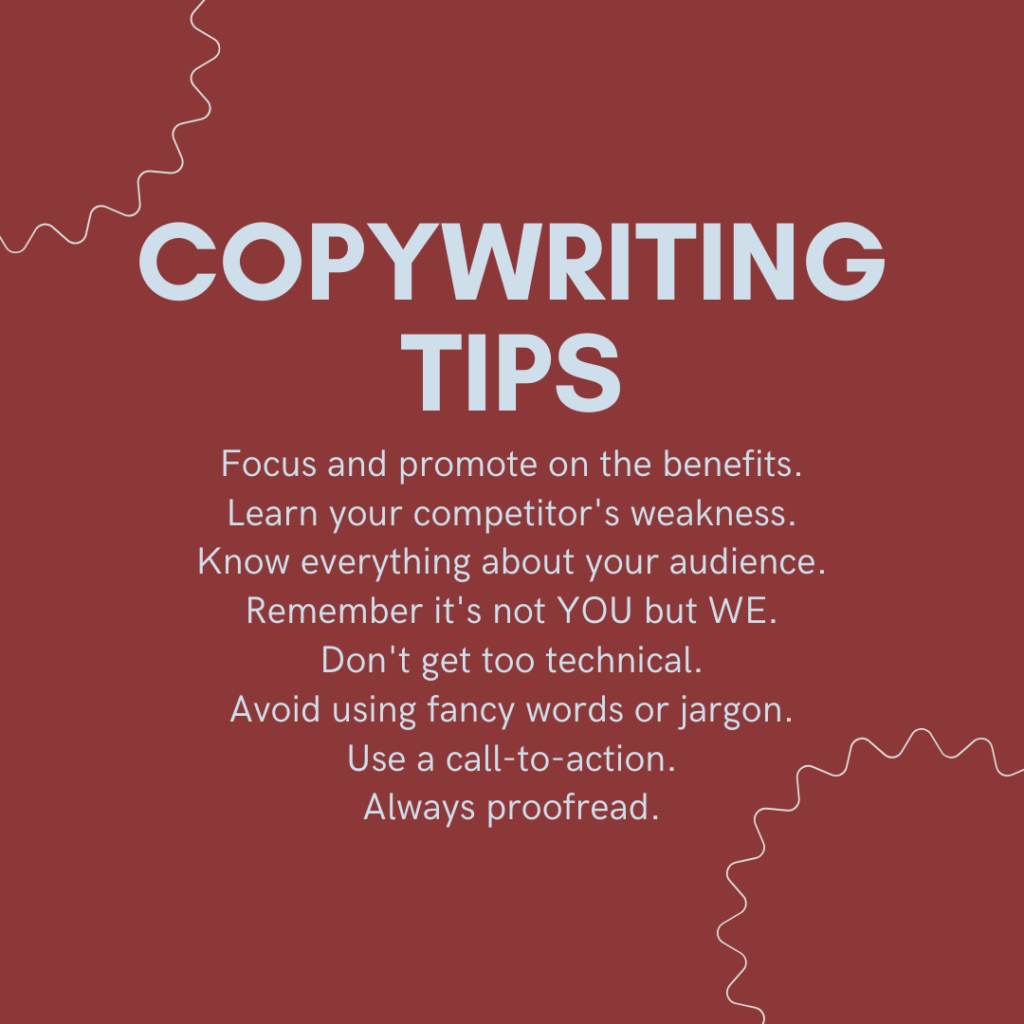
The Three Keys to Copy writing That Converts
Great copywriting is more than putting words on a page—it’s understanding how people think, feel, and make decisions. If you want your copy to work, you must master three core principles that truly influence buyers.
1. People Hate Being Sold To
Most people resist anything that feels like a hard sell. Whether online or in-store, pushy marketing triggers instant rejection. This is why effective copywriting never screams “BUY NOW!”
Instead, it focuses on guiding, helping, and connecting with the reader. The goal is to make the reader feel understood—not pressured.
2. People Buy Emotion First
Customers don’t buy products; they buy the result the product brings.
For example, people might want a “summer body,” but they don’t get excited about the “training” required. The desire (emotion) is the body. The method (logic) is the training.
Your job is to highlight the emotional reward your product offers—how it makes life easier, happier, or better.
3. They Justify Their Decision With Logic
After emotion pulls them in, people still need logical reasons to justify the purchase.
That’s where incentives and proof come in—discounts, limited-time offers, social proof, guarantees, or clear explanations of value.
For example, a limited-time 50% discount helps the buyer feel they’re making a smart choice and not wasting money.
The Core Idea:
People buy with emotion
→ then justify with logic.
Your copy should:
- Appeal to emotions
- Paint a clear picture of results
- Provide logical reasons to act now
Mastering these three keys allows you to sell without sounding salesy—the true art of copywriting.
Writing Personalities: Choose the Style That Actually Connects
When it comes to copywriting, there are two major writing personalities—and understanding the difference will shape how your audience responds to you.
1. The Pushy Product Seller (Old and Ineffective)
This style is outdated. It sounds like:
“Buy now! Limited time! Get this amazing product today!”
It’s aggressive, salesy, and turns readers away. Modern audiences don’t want to be pressured—they want to be understood.
2. The Personal, Relationship-Driven Writer (What Works Today)
This is the writing style that builds trust. Instead of shouting at your audience, you connect with them—speaking to their needs, frustrations, and desires. This is the style beginners should focus on.
How to Write in a More Personal, Human Way
• Become the customer
Put yourself in your reader’s shoes.
Ask yourself:
- What am I struggling with?
- What do I want?
- What results am I hoping for?
Understanding your audience’s emotions helps you write copy that feels relatable and authentic.
• Show a weakness
Honesty builds trust.
You can say things like:
- “This product is designed for complete beginners.”
- “This is not a quick-fix solution; it takes real work.”
Showing the limits of your product attracts the right audience and repels the wrong one—which is exactly what good marketing does.
• Use your face
Adding a picture of yourself creates an instant human connection. People trust faces more than plain text. Even on social media, posts with faces get more clicks and engagement. A real image makes your message feel genuine.
• Share your own experience
Tell your story.
Explain how the product helped you, what challenges you faced, and how things changed afterward. Use emotions and details to paint a vivid picture. Sharing your journey makes your copy believable and relatable.
The goal of this writing personality is simple:
Build trust by being human.
When readers feel understood—not pressured—they’re far more likely to convert.
It’s Never About Time or Money
As a copywriter, you’ll often hear potential customers say:
“I don’t have the time” or “I don’t have the money.”
Here’s the truth: most of the time, it’s not really about time or money—it’s about importance and confidence.
Time Is About Importance
Everyone is busy. We all have a thousand things to do. But when something truly matters, people make time for it.
Your job as a copywriter is to show why your product or content is important. Connect it to emotion, highlight the results, and make readers feel that investing their time with you is worthwhile.
Tip: Always communicate value, create curiosity, and show a tangible outcome. When readers feel it’s worth it, they’ll engage.
Money Is About Confidence
Money objections often hide a deeper concern: “Am I making the right choice?”
If customers believe your product is valuable, necessary, and guaranteed to deliver results, they’re far more willing to spend. Confidence in your product translates to confidence in the purchase.
This means:
- Back your claims with proof
- Show clear results
- Make the offer feel low-risk and high-value
When you address both time and money objections effectively, you remove barriers to action and make your copy far more persuasive.
Headlines: Grab Attention Immediately
A headline is the first thing readers see—it needs to capture attention and answer the question: “What’s in it for me?”
Key tips for creating effective headlines:
- Speak to your target audience: Narrow, specific headlines make readers feel the content is made just for them.
- Highlight a big promise or result: People care about outcomes, not features.
- Use urgency or offers: Limited-time deals or discounts encourage action.
- Try proven formats:
- Announcements: “Finally, the ultimate passive income course is here”
- Big promises: “Lose 10 pounds without dieting—guaranteed”
- How-to guides: “How to start an online business in 30 days”
- Questions: “Are you making these common mistakes?”
- Testimonials: “How Jane earned $20,000 from this course”
- Short callouts: “Entrepreneurs: Need more clients? Click here”
The goal is to hook readers emotionally and get them to continue reading.
Subheads: Keep Readers Engaged
Subheads break your content into scannable, intriguing sections. They guide readers—especially those who skim—to understand the value of your content.
Tips for strong subheads:
- Spark curiosity: Make readers think, “I want to know more.”
- Focus on emotions: Connect to desires, pain points, or benefits.
- Inject personality: Write conversationally to build trust.
- Avoid plain or dull statements: Instead of “Your screen is cracked,” try “You can’t buy cases for your phone anymore.”
Great subheads make content scannable, engaging, and emotionally compelling, ensuring readers stay and explore your copy.
Use Persuasion to Boost Conversions
Persuasion is at the heart of effective copywriting. It moves readers from curiosity to action—whether that’s clicking an ad, signing up, or buying a product. Here are five key persuasion techniques every beginner should master:
1. Emotions
People make decisions based on feelings, not just logic. Connect your product to a story or experience to make it relatable.
Example: “The phone that changed my life and 4.3 million others” is more compelling than a generic claim.
2. Scarcity (FOMO)
Fear of missing out motivates action. Limited-time offers or stock restrictions create urgency.
Example: “Sale ends in 25 minutes. Don’t miss out.”
3. Specificity
Precise numbers and details build credibility. Vague claims feel less trustworthy.
Example: “How I gained 52,367 subscribers in one day” is far more persuasive than “tons of subscribers.”
4. Humor
Light humor makes your copy memorable and relatable, but use it wisely to fit your audience.
Example: “Bad days happen, but at least your stuff will be dry.”
5. Social Proof
Show that others trust your product. Reviews, testimonials, or statistics create confidence.
Example: “1,566 amazing people gave our new book a five-star review.”
By combining emotions, urgency, specificity, humor, and social proof, your copy becomes more persuasive, relatable, and effective at converting readers into customers.
Use Power Words to Drive Action
Power words are persuasive terms that trigger emotions and encourage readers to take action—whether that’s clicking, buying, or signing up. Here are five highly effective power words every copywriter should use:
1. Free
Everyone loves free stuff. It immediately grabs attention and adds value.
Example: “Buy a new phone and get headphones for free.”
Tip: Only use “free” when you genuinely have something to offer. Misusing it damages trust.
2. New
Humans are naturally drawn to new things—products, services, or methods.
Example: “Get the new CM skates with free shipping today at 15% off.”
Tip: Use “new” for genuinely new offerings. Don’t label old products as “new.”
3. Easy
Simplicity appeals to everyone. “Easy” communicates that a solution won’t be complicated.
Example: “Robert lost 15 kilos in four weeks with a new easy method.”
Tip: Only use “easy” if your product or method truly delivers simplicity.
4. Save
People love saving money. Specific amounts create urgency and clarity.
Example: “Save $100 on this new backpack today only.”
Tip: Use “save” only when the deal or discount is real and meaningful.
5. You
Personalization makes your copy more engaging. Directly addressing the reader creates a connection.
Example: “You, Charlie, won one free month on Netflix.”
Tip: Only use names when appropriate and with consent to avoid feeling intrusive.
Using these power words strategically can boost engagement, clicks, and conversions. Combine them with strong headlines, benefits, and emotional appeal to maximize their impact.
12. Steps to Craft the Perfect Story
Stories engage readers, make your message relatable, and drive action. Here’s a simple framework:
- Characters: Who is in your story? It could be a customer, staff member, or even a competitor.
- Plot: What happens? Focus on the journey or challenge your character faces.
- Setting: Where does the story take place? Context makes the story real.
- Conflict: What’s the problem? Obstacles keep readers invested.
- Resolution: How is the problem solved? Highlight results, transformation, or benefits.
13. The AIDA Model
AIDA is a classic copywriting framework for effective, structured messaging:
- Attention: Grab attention with urgency, curiosity, or an enticing offer.
- Interest: Maintain curiosity with storytelling, pain points, or facts.
- Desire: Highlight benefits, solve problems, and show social proof.
- Action: Encourage a clear next step with a strong CTA.
Example for a Free E-Book:
- Attention: “Free Guide: Learn How to Make $81,423 Extra Per Year!”
- Interest: “Thousands have used these simple strategies to boost income.”
- Desire: “Get your free guide and start your journey to financial freedom.”
- Action: “Click ‘Start Now’ to download.”
14. Overcoming Writer’s Block
Writer’s block can stall your creativity. Break free with these tips:
- Change your environment: Work in a café, park, or library.
- Walk or exercise: Stimulates ideas and clears your mind.
- Read or listen: Books, articles, or music can inspire new angles.
- Mind mapping: Visualize ideas branching from a central topic.
- Set a timer: Write continuously for 10 minutes without worrying about perfection.
Pro Tip: Focus on starting, not perfecting—momentum leads to creativity.
15. Understanding Call-To-Action (CTA)
A CTA guides readers to take the next step—subscribe, buy, or click. A good CTA:
- Is clear and direct: “Sign Up Today,” “Buy Now.”
- Aligns with goals: Matches your offer without overpromising.
- Builds urgency: “Limited Time Offer – Ends Today!”
- Uses social proof: Show results or testimonials to build trust.
Example:
Headline: “Free Guide: Learn How to Earn $81,423 Extra This Year!”
CTA: “Download Now” → directs the reader to act immediately.
16. How to Write Effective CTAs
Step-by-step guide:
- Put Yourself in Their Shoes: Understand desires and motivations.
- Make it Stand Out: Use bold colors, buttons, or contrasting fonts.
- Use Short Power Words: “Join Now,” “Start Today,” “Get Free Copy.”
- Add Visual Cues: Arrows or icons can guide the reader’s eye.
- Include Social Proof: Testimonials, before-and-after images, or statistics boost credibility.
Example Update:
Instead of “Contact eslim.com,” use:
“Sign up for your FREE consultation now!”
Add arrows, a bold button, and a testimonial for maximum clicks.
These steps complete your copywriting course framework—from knowing your audience to writing compelling CTAs.